Executive Summary
The demand for power generation equipment continues to accelerate, driven by hyperscale data centers, electrification, and renewable integration. With OEM lead times struggling to meet delivery for at least 3-5 years, developers are increasingly turning to existing or “grey market” gas turbine assets.
While sourcing used equipment has become more crucial, successful relocation depends on how the asset is dismantled. Improper dismantling introduces risk—lost components, damaged systems, and incomplete documentation—resulting in costly delays during reinstallation.
TTS has been involved in the relocation of more than 100 gas turbines worldwide. From this experience, TTS developed TurbineTrack™, an asset identification and tracking system that ensures complete traceability and controlled dismantling.
The Challenge
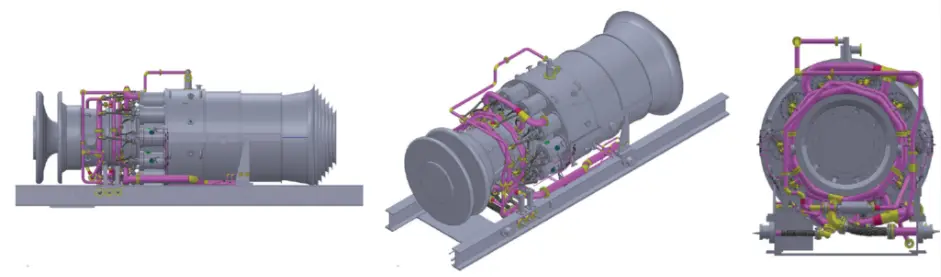
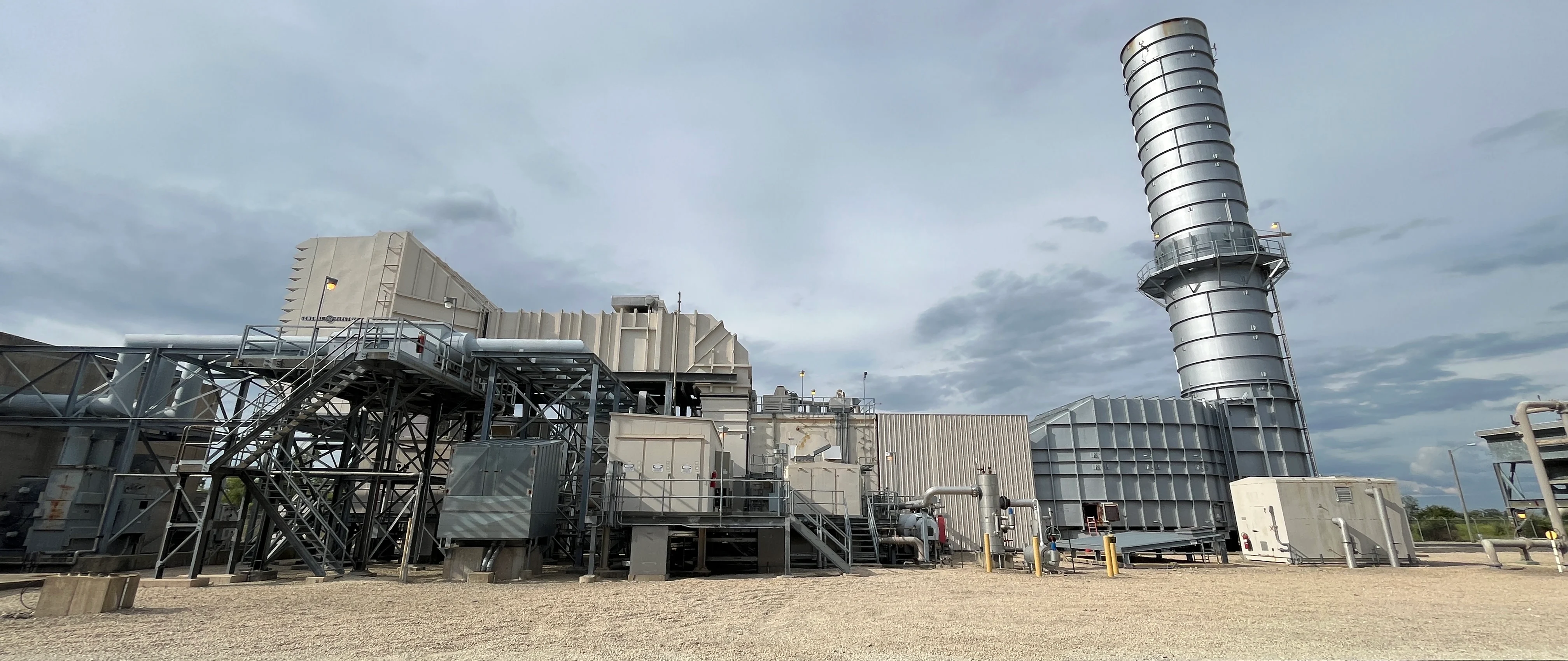
Gas turbine packages are highly complex assemblies made up of thousands of interconnected components spanning mechanical systems, electrical and control systems, auxiliary skids, piping, and structural elements. While major equipment tends to be well documented, it is often the secondary systems that create the greatest risk during relocation.
Further, over time, many plants undergo site-specific modifications that are not fully captured in OEM documentation. Labeling may degrade or disappear entirely, and installation practices can vary widely between sites. In addition, many components appear similar, making visual identification unreliable. As a result, without a structured approach, dismantling can quickly become disorganized, leading to confusion and errors during reassembly.
The TurbineTrack™ Solution
TurbineTrack™ is a structured methodology for identifying, cataloging, and tracking every component removed during dismantling.
At a high level, it integrates:
- Physical component identification
- Drawing-based referencing
- Photographic documentation
- Controlled data capture
Rather than relying solely on OEM documentation, TurbineTrack™ combines engineering expertise with disciplined field execution, ensuring that each component remains traceable from removal through reinstallation.
Methodology & System Structure
A defining feature of TurbineTrack™ is its structured approach to asset identification.
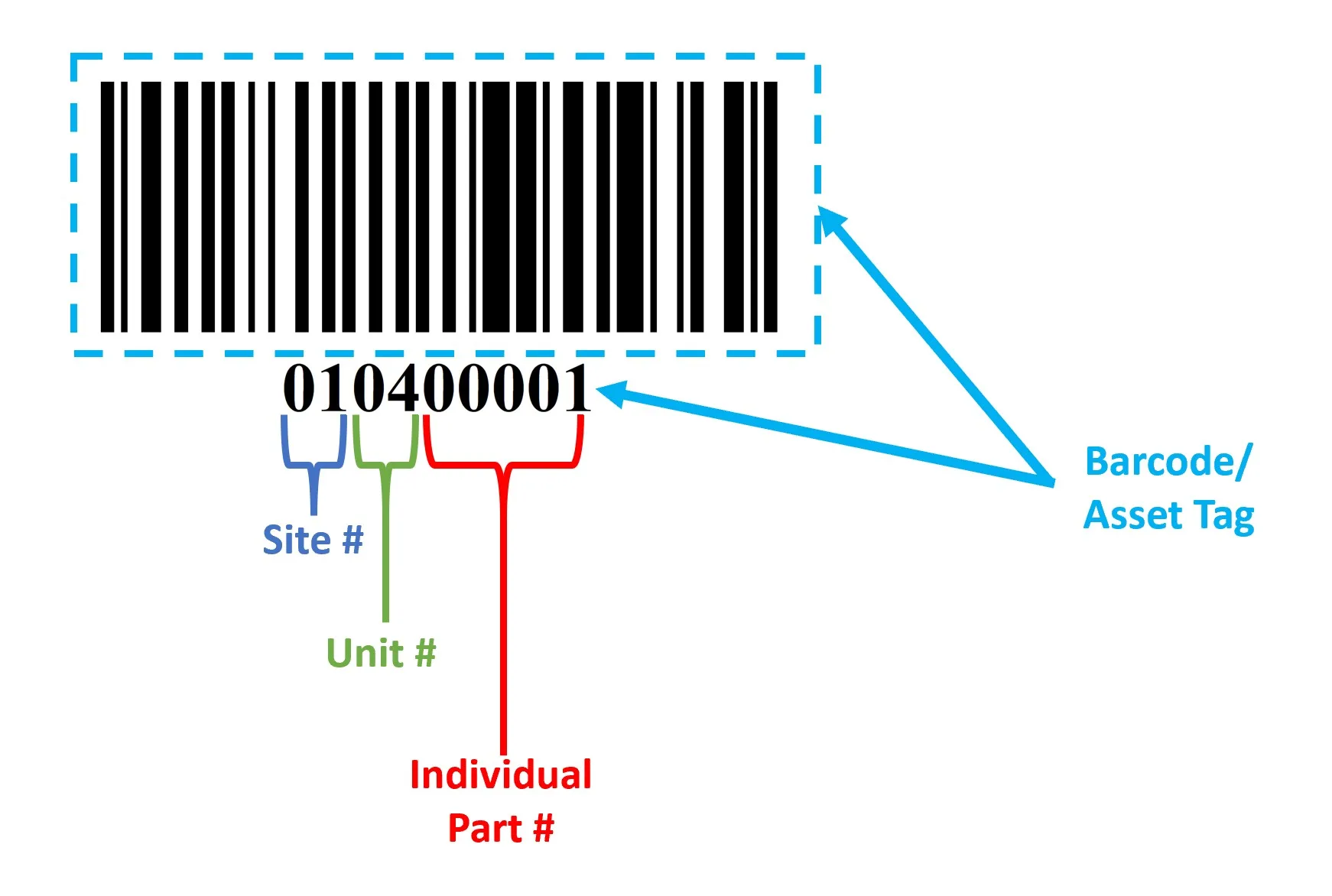
The tagging report uses a barcode-based identification framework, where each component is associated with:
- A source system or unit
- A subsystem or functional grouping
- A unique component reference
This structure enables large volumes of components to be tracked in a logical, system-based format, rather than as disconnected parts.
System-Based Organization
Components are grouped into defined system categories, consistent with plant configuration, including:
- Enclosures and compartments
- Cooling and auxiliary systems
- Fuel gas and piping systems
- Electrical and balance-of-plant equipment
This approach ensures that dismantling follows the natural structure of the plant, supporting efficient reassembly.
Field Execution Approach
During dismantling, TurbineTrack™ is implemented by a specialized team working alongside mechanical contractors.
Key activities include:
- Identifying and marking components prior to removal
- Capturing photographic records of condition and configuration
- Recording system relationships and interfaces
- Maintaining alignment with engineering drawings
Field documentation examples show how multiple components within a single assembly are clearly identified and linked to their system context.
Drawing Integration
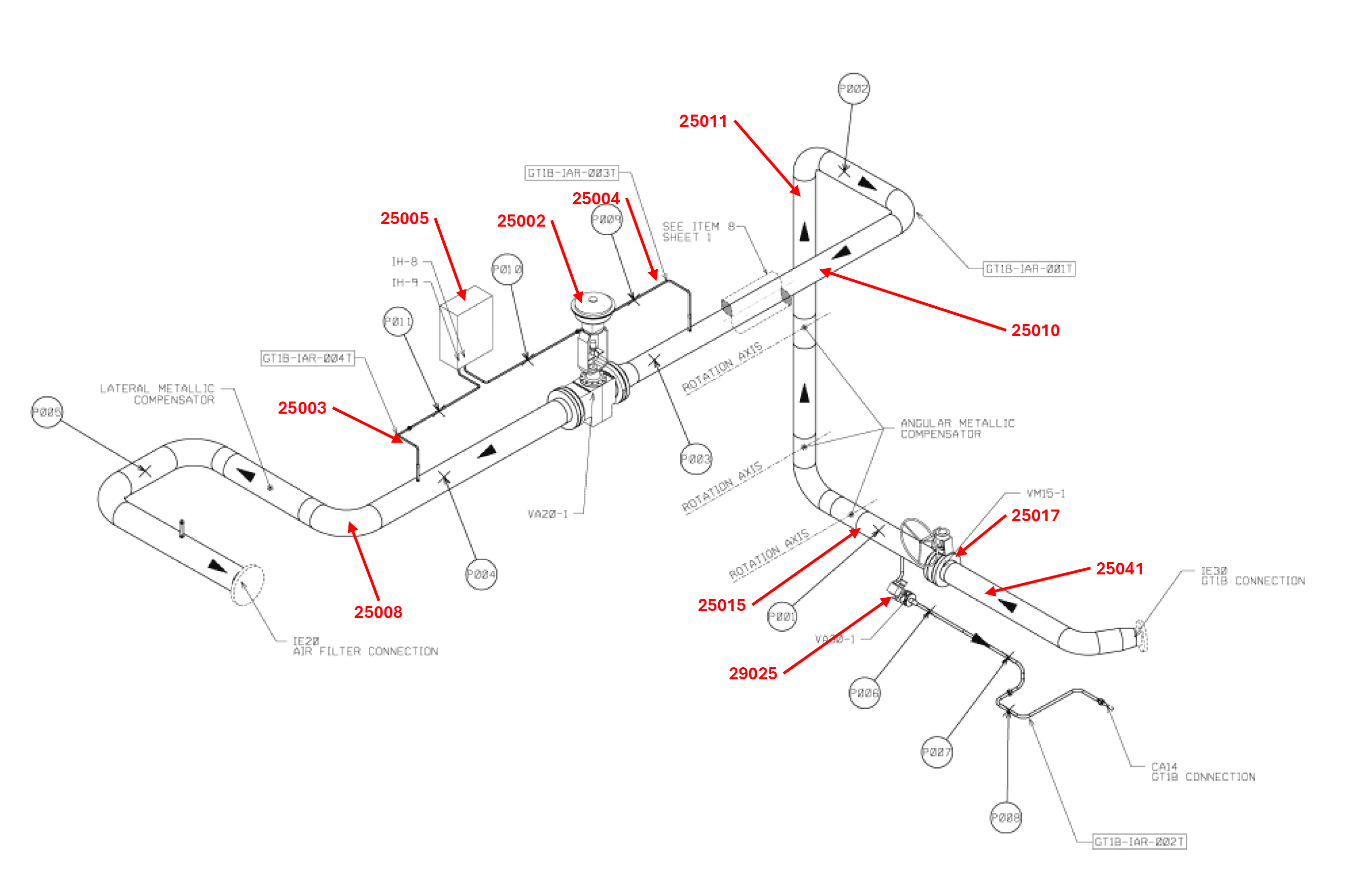
A critical strength of TurbineTrack™ is its integration with engineering drawings.
- Components are mapped directly onto drawings
- Identification references are overlaid on system layouts
- Physical items are tied back to engineering documentation
Benefits, Application & Conclusion
Benefits to Project Stakeholders
TurbineTrack™ delivers measurable value across the project lifecycle:
Full Traceability
Every component is identified and accounted for from removal through reinstallation.
Reduced Reengineering
No need to reinterpret layouts during reassembly.
Schedule Certainty
Eliminates delays caused by missing or misidentified components.
Cost Control
Reduces labor, rework, and replacement material costs.
Risk Reduction
Transforms dismantling from a high-risk activity into a controlled, engineered process.
Case Application
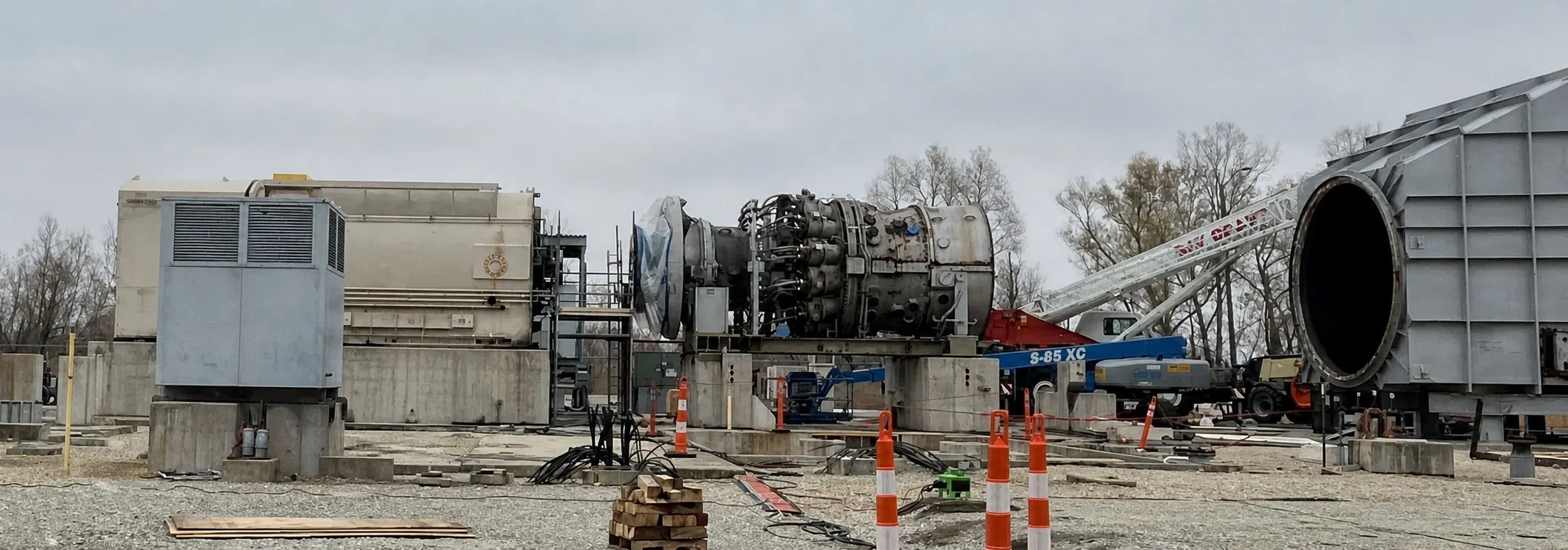
On a recent large-frame gas turbine relocation project, thousands of individual components were cataloged and tracked using TurbineTrack™. Auxiliary systems were fully documented, and all components remained traceable throughout the dismantling and transportation process.
The final tagging report demonstrated a high level of detail, combining field images, annotated drawings, and structured asset data into a single, coherent record.
Conclusion
Gas turbine relocation projects are won or lost during dismantling. Without structured asset identification, projects face avoidable cost, delay, and risk.
TurbineTrack™ provides a proven, field-tested methodology that ensures:
- Complete asset visibility
- Efficient and accurate reassembly
- Reduced project risk
In today’s fast-moving energy market, disciplined asset tracking during a gas turbine relocation is not optional—it is essential.
Contact
For more information on TurbineTrack™, contact TTS.