- Please tell us a little about yourself
Patrick was born in Ireland but has lived and worked in the United States for over 35 years. His experience with gas turbine equipment in power generation and process industries includes project management, system design, and technical supervision of installation, commissioning, operation, and maintenance of various heavy industrial gas turbines and associated equipment.
Currently Vice President of TTS Power, he is responsible for all ongoing support and development of products and services for gas turbines used in power generation applications. He has also established and developed an International Sales and Marketing Program for Europe, the Middle East, and Asia (EMEA), building local partnerships in each target market.
Patrick holds a BSc, in Mechanical Engineering from University College Dublin and an Executive MBA from the University of Houston, in addition to attending numerous GE Technical Training schools.
In his early career with General Electric, Chromalloy, Unitech, and HSDE, Patrick developed his extensive knowledge of heavy rotating equipment by performing engineering roles, including Mechanical Field Service Engineer (GE and Chromalloy), Speedtronic Control System Service/Startup Engineer (GE and Chromalloy), PLC Control System Development Engineer (Unitech) and Controls Group Engineering Manager (HSDE).
- What is a Vintage Gas Turbine?
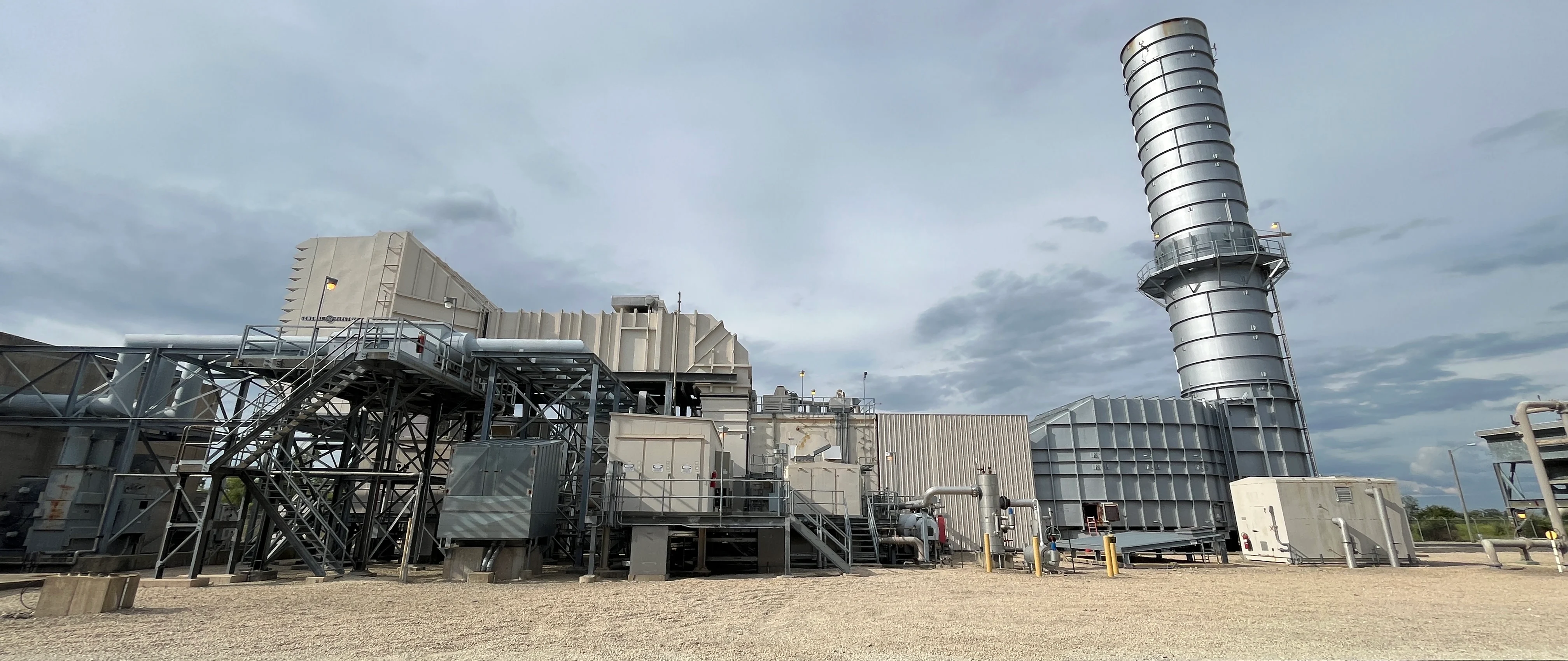
There is no formal definition describing a “vintage” gas turbine, but it generally refers to one or more of the following classes of unit:
- Units 25+ years old
- Units that are pre -“F” technology
- Units that are permitted for 25+ ppm NOx
- Units with first-generation digital controllers or older.
- Where is a Vintage Gas Turbine typically found/located?
Everywhere! Vintage units are typically those that were initially base-loaded or heavily used peaker units but which, more recently, have been little used or “retired” for low efficiency, high per kW cost, or poor reliability.
- Why are these assets still in place? Why have they not been replaced by more modern/efficient assets?
In most cases, these units have been replaced or superseded by newer, larger, and more efficient units. In many cases, these units are still used because they are needed to maintain capacity margins, voltage support, or emergency backup support to other assets (black start). Other units are mothballed or retired in place because their market value is lower than the removal cost.
- What advantages (if any) do vintage gas turbines have over new, more efficient, hi-tech gas turbines?
- They are already installed with existing infrastructure in place.
- They are typically fully depreciated assets.
- Their permitting is typically grandfathered.
- They are widely dispersed across the grid.
- They can be rehabilitated and made reliable for relatively little capital cost.
- They are flexible, and many have multiple fuel capabilities.
- They are simpler to operate.
- They can start and get online very quickly.
- Why is there so much activity surrounding the modernization of vintage turbines in the US and worldwide?
- Electricity consumption continues to grow.
- In the US, Renewables are projected to increase from 21% of US generation in 2021 to 44% by 2050 but will always need a responsive backup energy source for grid stability.
- Recent “100-year” climate occurrences have increased the need to plan for additional reliable backup generation for short-term operation.
- Building a new power plant is expensive, time-consuming, and requires navigating regulation and planning permissions.
- Vintage units can fill this support niche if flexible, reliable, and available.
- What types of services/conversions can TTS offer to make a vintage gas turbine more valuable in the market it serves?
Conversions generally focus on making the unit more reliable, available, dispatchable, and starting faster. Specifically, the upgrades include:
Reliability Upgrades:
- On-Base Device Upgrade and Rationalization
- Elimination of single points of failure
- Rewires
- Hydraulic/Pneumatic System Removal and Replacement with electric systems.
- Fuel System Simplification
- Control System Upgrade (Turbine)
- Excitation/Protection System Upgrade (Electrical)
- Auxiliary System Upgrades
Availability Upgrades:
- On-Base Device Upgrade and Rationalization
- Elimination of single points of failure
- Rewires
- Hydraulic/Pneumatic System Removal and Replacement with electric systems.
- Fuel System Simplification/Redundancy
- Control System Upgrade (Turbine)
- Excitation/Protection System Upgrade (Electrical)
- Auxiliary System Upgrades
- Remote fault monitoring/alarming
- Remote auxiliary system monitoring
- Remote starting
- Extreme weather hardening
Dispatch Upgrades:
- On-Base Device Upgrade and Rationalization
- Remote fault monitoring/alarming
- Remote auxiliary system monitoring
- Remote starting
- Extreme weather hardening
Fast Start Upgrades:
- Modify starter start/crank sequence.
- Modify ignition sequence (Fire on the Fly)
- Eliminate Turbine Warm Up
- Reduce/Eliminate Purge
- Increased Acceleration Rate following ignition.
- Fast Sync (ΔV ignored)
- Increase Loading Rate
Conversions to increase existing output beyond simple “peak” firing modifications are typically not cost-effective because of the relative inefficiency of these units, the low annual operating hours, and the high cost of mechanical component upgrades.
- What types of upgrades/rehabilitation programs does TTS offer for vintage gas turbines?
The above (item 7) plus unit package rehabilitation and recommissioning, including all auxiliary and BOP systems, have upgrade programs.
About TTS
TTS Energy Services (TTS) is the corporate parent for TTS Power and TTS Midstream. TTS provides engineering and construction expertise for the energy industry worldwide. The company’s long history and experience in providing technical solutions to global energy entities make it a leader in its field. TTS has successfully managed numerous power and compressor station modernization projects and supplied innovative and unique engineering solutions to challenging problems for our energy customers. Since 1983, their leadership and engineering teams have provided innovative technologies and engineered high-value solutions to over 450 clients worldwide.